


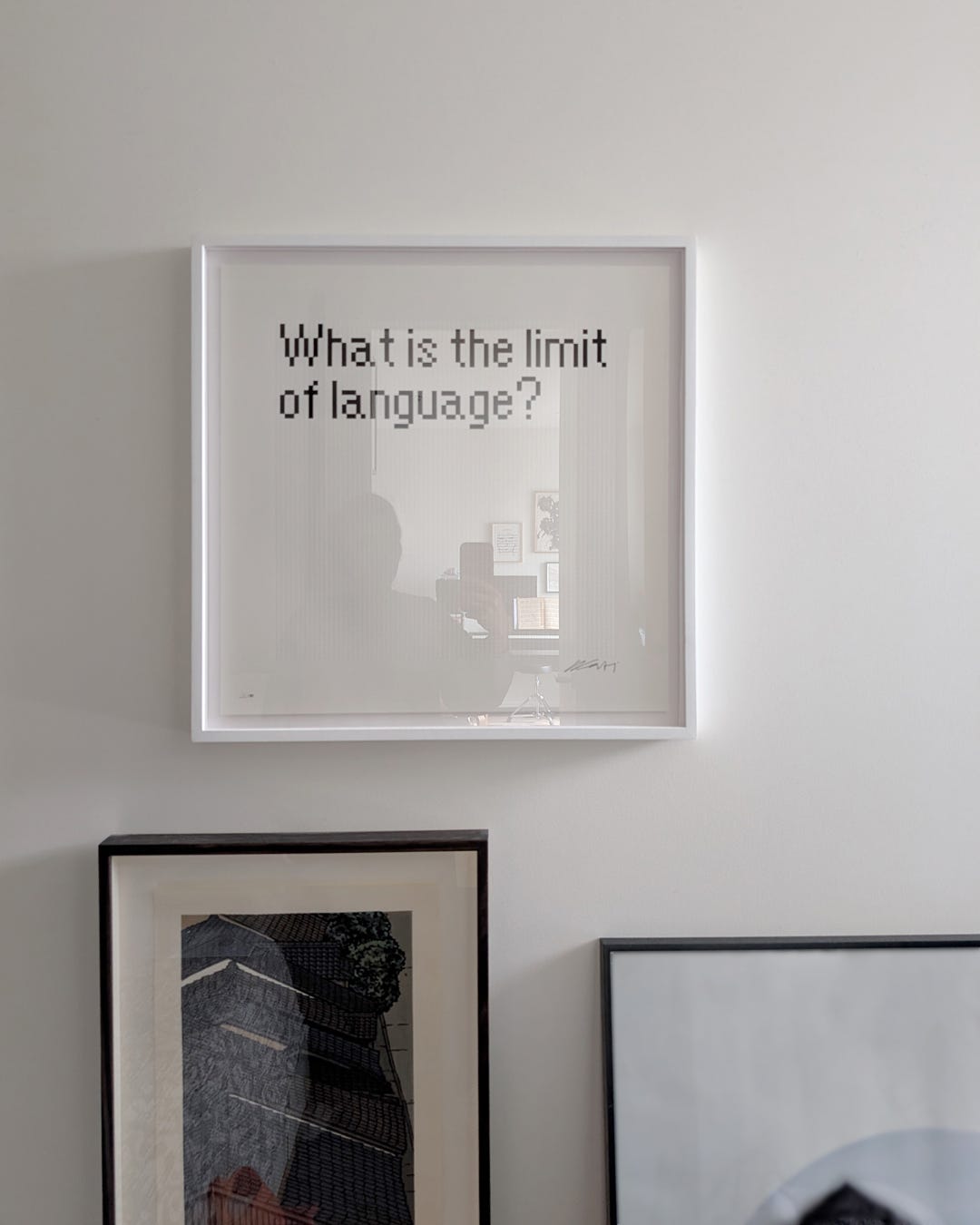
On my wall hangs a work I keep returning to — titled Ai vs AI: Question 66/81.
The premise is simple: both Ai Weiwei and a machine are asked the same question —
What is the limit of language?
Ai replies with the kind of economy that comes only from experience:
Language runs parallel to reality and cannot intervene.
The machine’s answer is something else entirely. Articulate, comprehensive, fatally keen to please — a cascade of context, theory, and philosophical disclaimers. It explains everything, and somehow misses the point.
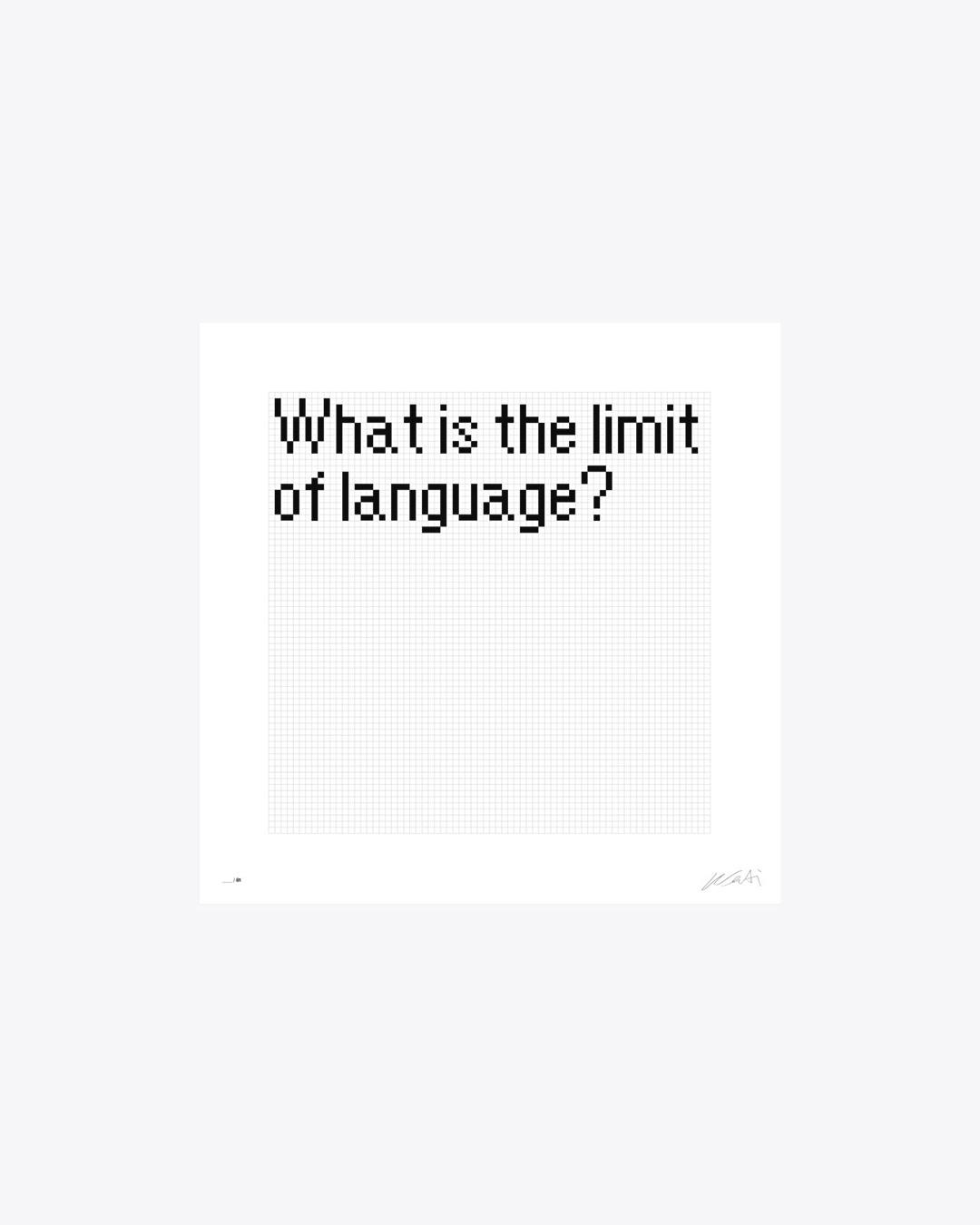
The number 81 is not incidental. It is the number of days Ai Weiwei, the contemporary artist-activist, was held by Chinese authorities in 2011, without charge or explanation. His answer carries that history. The machine’s cannot.
Both answers are impressive, in their own way, but neither quite touches what they’re reaching for. The space between them is not silence. It is tension. Identity, stretched thin between two kinds of fluency.
For most of human history, fluency signalled consciousness. To speak well was to think well. Language was treated as proof of mind.
Now we live with machines that can do this better than we can. Artificial intelligence treats language not as inheritance but as infrastructure: a pattern to be predicted rather than a thought to be lived. Its speech is immaculate, precise, and untethered from experience — a mirror trained to talk.
This is not a failure of the machine. It is an exposure of us.
Language was never proof of depth, only ever a proxy for it.
When language becomes abundant, it loses its edge. Fluency turns performative. Clarity blurs into noise. And as machines grow louder, the human response is not to compete, but to reorient. Not into silence exactly, but into subtler forms of expression — gesture, rhythm, material, space. Words have not abandoned us. They no longer carry the same weight.1
Language felt unstable to me long before the machines entered the room.
A message arrives: “Fine.” Agreement, irritation, withdrawal. The word stays still while its meaning slides. Tone does the work language cannot.
A sentence is a container that leaks. A fig cannot be described; it must be torn open.
Meaning, I’ve noticed, rarely stays within words. It moves through gesture, timing, implication — through what’s withheld as much as what’s offered. Some words don’t survive the crossing at all.
There is a classical Chinese text called the Tiānwèn, ‘The Heavenly Questions’, a poem of 172 unanswerable questions written around the 3rd century BCE. It asks about the origins of the universe, the nature of time, the structure of the sky. None of it expects a reply. The questions are the point.
Ai Weiwei’s 81 questions are a direct inheritance of this tradition: inquiry as a form of existence, rather than a route to resolution.2 What cannot be answered is the condition that keeps meaning alive, not a failure of it.
Language doesn’t contain reality. It runs alongside it, a system of signs about the world, not the world itself.3 A map, not the terrain.
When words reach their limits, other systems take over. Music renders emotion as vibration. Images turn thought into light. Architecture organises space into syntax. Meaning doesn’t stop where language stops; it changes medium. Expression relocates, and identity migrates into objects and environments that communicate without explanation.
A building can express dignity without engraving the word. A logo can suggest lineage without a slogan. A piece of music can undo you without a single lyric.Ai vs AI was broadcast across several major cities at exactly 20:24 over 81 days — a philosophical question inserted into the texture of the city, at the scale of a building, addressed to people who hadn’t chosen to be asked.4
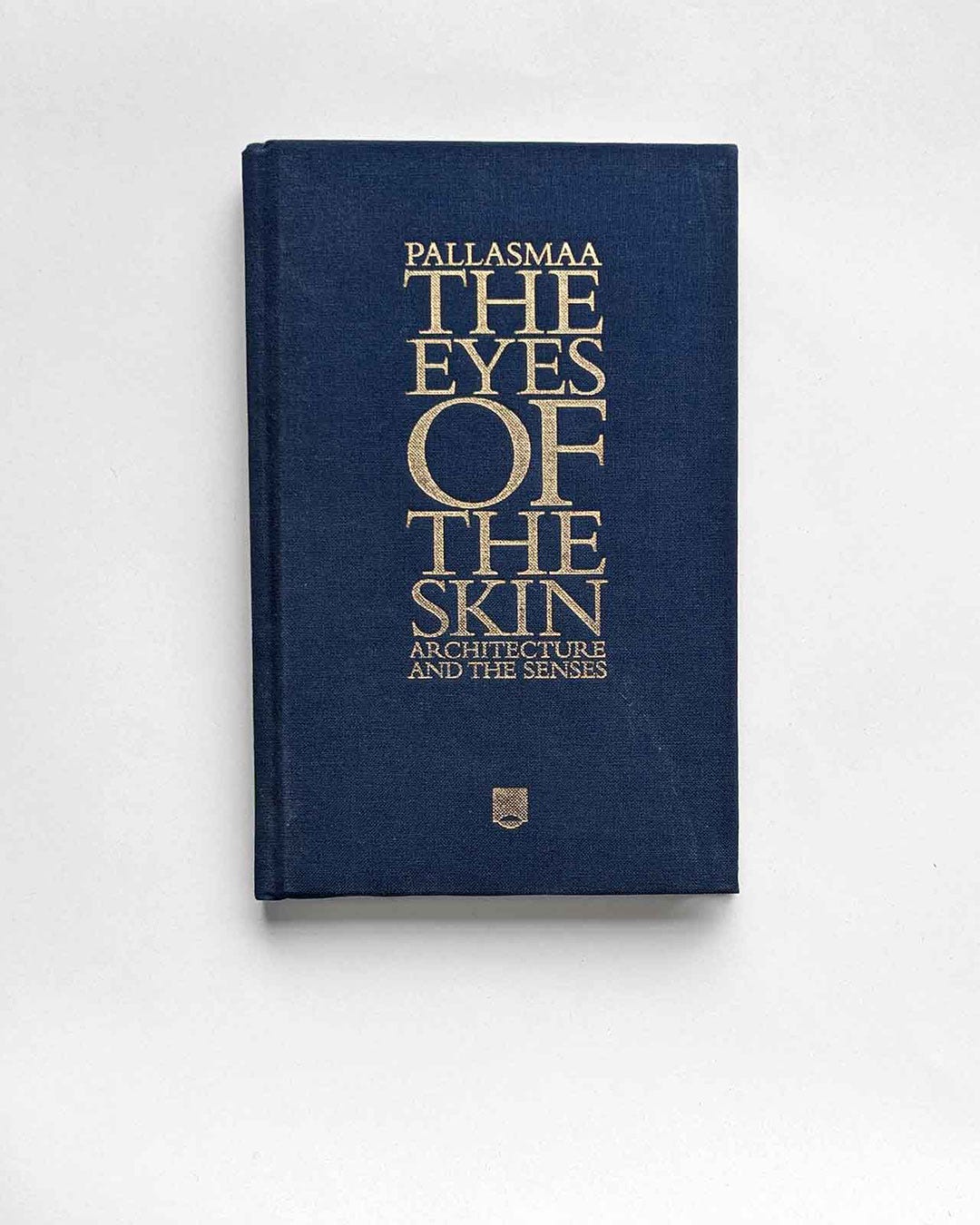
Consider the quiet authority of Juhani Pallasmaa’s writing on architecture: buildings speak through proportion, shadow, texture, through the way a hand meets a door handle or the way light settles into a corridor.5
Meaning is carried not in description but in encounter.
In a world saturated with language, meaning becomes spatial.
Architecture, art, and design operate as parallel systems alongside language, disciplines built to hold what words cannot. To design is to work at the edge of articulation, constructing signals that survive when language collapses under its own convenience.
I look again at Ai Weiwei’s sentence. Its strength lies in its refusal to elaborate. It recognises that the closer language moves toward truth, the more it begins to blur.
The machine, by contrast, continues: precise, expansive, and hollow in the way only the fluent can be.
Perhaps the task now is less saying, more restraint. To locate identity not in the noise of expression but in the margins around it: in timing, in texture, in what is withheld.
We are fluent creatures, yes. But fluency is no longer the point.
What endures is the residue the sentence leaves behind: the misstep, the pause, the undertone.
What persists when the language runs out?The print on my wall is a reminder that meaning survives beyond words, in what escapes them. Ai Weiwei's project is called Ai vs AI, though it was never really a competition. The machine answers fluently, completely, and without hesitation.
Ai asks — which is the only thing the machine cannot do sincerely.
Thanks for reading.


Yes, I do realise the irony of this, as I'm writing this Substack piece.
Qu Yuan (approx. 340–278 BCE). Tiānwèn ('Heavenly Questions'). In Chuci ('Songs of Chu'). 172 unanswered questions on cosmology, mythology, and history. The complete Ai vs AI series is archived at circa.art.
Saussure, Ferdinand de. Course in General Linguistics. Translated by Roy Harris. Duckworth, 1983 (orig. 1916). Barthes, Roland. Mythologies. Paladin, 1972 (orig. 1957).
Ai vs AI. Commissioned by CIRCA. Broadcast nightly at 20:24 on screens in London, Seoul, Berlin, and Milan, January–March 2024. Circa.art
Pallasmaa, Juhani. The Eyes of the Skin: Architecture and the Senses. Wiley, 2005.